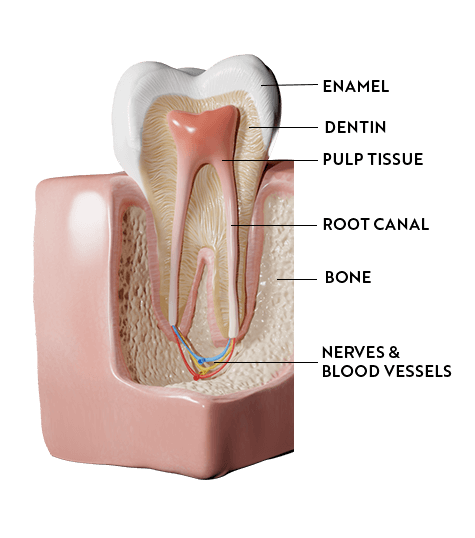
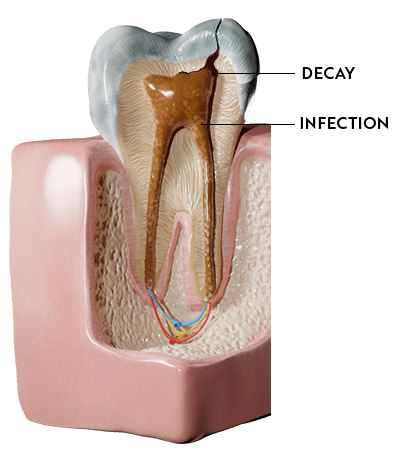
A root canal is a dental procedure used to treat infection or inflammation inside a tooth. It involves removing the soft pulp tissue—which contains nerves and blood vessels—from the hollow center of the tooth (called the pulp chamber), cleaning the inside of the root canals, and sealing the space to prevent future infection. This procedure relieves pain and can save a natural tooth that might otherwise need to be extracted.
Quick Facts About Root Canal Treatment
Purpose: Treat infected or inflamed pulp and save the tooth
Performed by: General dentist or endodontist
Pain level: Minimal with local anesthetic
Typical duration: 60–90 minutes
Follow-up: Temporary or permanent filling, often a crown
Why Might You Need a Root Canal?
When the pulp inside your tooth becomes infected (often due to deep decay, repeated dental work, or trauma), pressure builds within the tooth. Because the pulp is surrounded by hard dentin, it can’t expand—leading to sharp, shooting, or throbbing pain. Removing the infected pulp relieves this pressure and prevents the infection from spreading to surrounding tissues.
What Happens During a Root Canal?
Local Anesthesia Your dentist numbs the area so you don’t feel pain during the procedure.
Isolation with Rubber Dam A rubber dam is placed to keep the tooth dry and free of saliva.
Pulp Removal & Cleaning The dentist opens the tooth, removes the infected tissue, and cleans the canals using tiny files.
Shaping & Disinfection The canals are shaped and disinfected to remove bacteria.
Filling & Sealing The cleaned canals are filled with a biocompatible material and sealed to prevent reinfection.
Restoration A temporary or permanent filling is placed. In many cases, a crown is later added for strength.
What Should I Expect After Treatment?
Mild Discomfort: Tenderness or soreness is normal and usually managed with over-the-counter pain relievers.
Temporary Filling: You may receive a temporary filling until a crown is placed.
Crown Placement: Because root canal teeth become more brittle, a crown is usually recommended to prevent cracking.
Post-Treatment Care: Follow your dentist’s aftercare instructions and take any prescribed antibiotics if needed.
FAQ About Root Canals
Q: Is a root canal painful? A: With local anesthesia, most patients report no more discomfort than a standard filling.
Q: How long does a root canal last? A: With proper care and a crown, a root canal-treated tooth can last a lifetime.
Q: Will I need more than one appointment? A: Some treatments are done in one visit, others may need two depending on the complexity.
Q: Is a crown always required after a root canal? A: Usually yes—especially for back teeth—because it protects the tooth from breaking.
Tooth Anatomy: Why Root Canals Work
Understanding the internal structure of your tooth explains why root canal therapy is so effective. When decay or trauma damages the soft inner pulp, the surrounding hard tissues trap inflammation inside, causing pain. By removing the damaged pulp and sealing the canal, your dentist restores function while preserving the natural tooth.
Why Is My Tooth Grey?
For more information on root canal therapy, read our blog on Why Is My Tooth Grey.
Our team has delivered outstanding dental care in Denton for over 20 years. We are committed to providing our community with safe, gentle, high-quality dental care.
Questions or Concerns?
Should you have any questions or concerns regarding your dental care, we are more than happy to discuss how you can achieve a beautiful and healthy smile.
As a top dentist in Denton, we have helped hundreds of families achieve their oral health goals and are eager to help you and your family do the same.